
Sports organizations know a lot about the fans who buy tickets, purchase merchandise, join loyalty programs, use their apps, or otherwise interact directly with them. That first-party data is incredibly valuable.
But it is also just the tip of the fandom iceberg.
There is a much larger universe of fans outside those known relationships. Some are highly engaged Superfans who may rarely appear in the organization's first-party data. Others are Casual Fans whose relationship with the team could become much stronger with the right experiences and opportunities to engage. Understanding that broader fan base means looking beyond those who have already raised their hand.
Start With the Fans You Know
Ticketing, ecommerce, CRM, loyalty programs, apps, websites, and other direct interactions provide a strong foundation for understanding known fans. But a transaction does not always tell you the strength of the fandom.
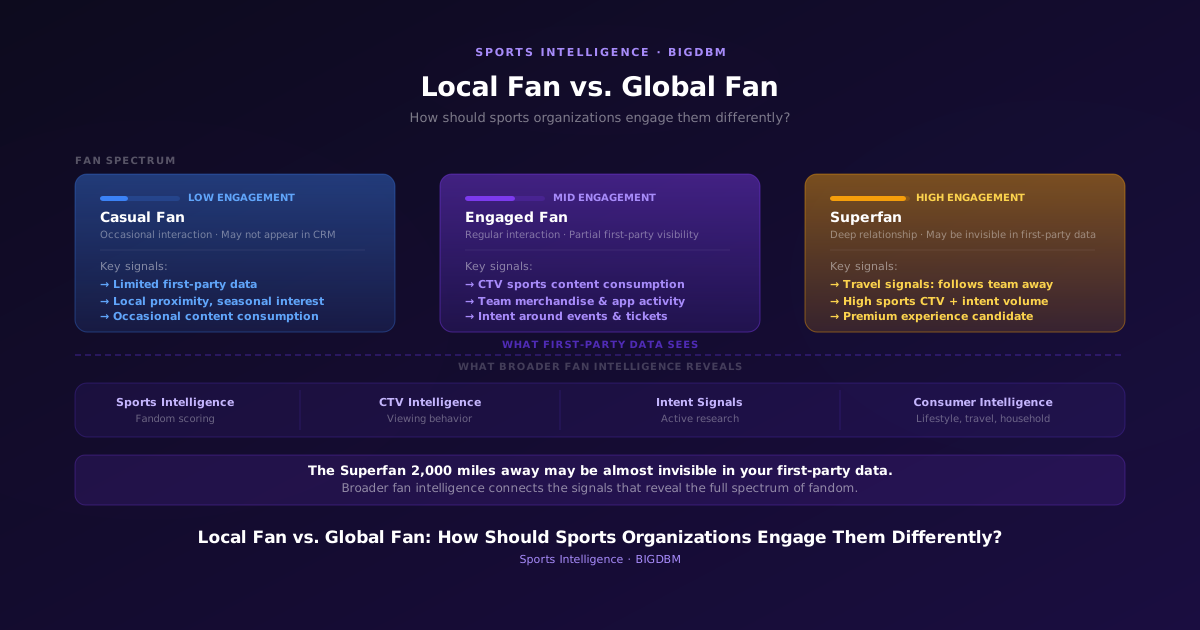
A Casual Fan who lives 15 miles from the stadium and attends one game a year may be highly visible. A Superfan living 2,000 miles away who watches nearly every game but has never purchased directly from the team may be almost invisible.
And there are plenty of fans somewhere between those two extremes. They follow the team, watch some games, engage occasionally, or attend when the opportunity presents itself. With the right experience, some may develop a much stronger relationship with the organization.
The fans you know are not necessarily the only fans you have, and your Casual Fans do not necessarily have to remain casual.
Understand the Level of Fandom
Once organizations look beyond their first-party audience, the picture of the fan base can change significantly. Rather than treating someone as simply a fan or non-fan, understanding different levels of fandom provides a more useful view.
Occasional Interaction
- Attends locally when convenient
- Limited direct purchases
- Seasonal interest patterns
- Potential to deepen with the right experience
Regular Relationship
- Follows games across platforms
- Some merchandise & app activity
- CTV sports consumption
- Responds to loyalty programs
Deep Affinity
- Follows team home and away
- High CTV + intent volume
- Travel signals around games
- Premium experience candidate
Geography is part of the answer to who your fans are, but it should not define the fan. A fan who shows up when the team plays at an opposing team's stadium could be a local resident who supports the visiting team, a Superfan who traveled specifically for the game, or a Casual Fan who simply decided to attend. The ticket tells you that someone was there. It does not necessarily tell you the relationship behind that attendance.
Look at the Signals Surrounding the Fan
Level of fandom is important, but it is only one dimension. There are many other signals that can add context to the fan relationship.
CTV viewing behavior can provide insight into how sports and other content fit into a household's media consumption — not just what they watch, but how deeply they engage with it.
Intent data provides more timely signals about what someone is actively researching or showing interest in — tickets, travel, merchandise, or related content — right now.
Consumer intelligence — demographic, household, lifestyle, purchase, financial, automotive, and travel characteristics — adds context about the person behind the fandom.
Identity helps connect first-party interactions with external signals to create a more complete view of who the fan actually is across every touchpoint.
No single signal provides the answer. A Casual Fan who begins consuming significantly more sports or team-related content may warrant a different experience than someone whose engagement remains occasional. A Superfan with strong travel signals may represent an opportunity around away games or destination experiences. A family household may value a very different game-day experience than a younger fan who primarily engages through digital channels.
The value is not in having more data. It is in connecting the right signals to better understand the fan and the opportunity that each relationship represents.
Create Paths to Deeper Fandom
For Superfans, the opportunity may be to recognize and build on an already strong relationship.
Superfan engagement: Premium experiences, exclusive access, memberships, loyalty benefits, special merchandise, fan communities, behind-the-scenes content, and home or away game experiences can each provide additional ways to strengthen that connection.
For Casual Fans, the opportunity is different. It may be about creating more reasons to engage — not about maximizing revenue from a relationship that does not yet exist.
Casual Fan development: A better first game-day experience, family-focused events, community programs, player access, team history, relevant content, loyalty programs, or experiences connected to interests they already have can all create that initial stronger connection.
Not every Casual Fan will become a Superfan. But understanding which fans are showing signs of stronger affinity or increasing engagement can help organizations identify where there may be an opportunity to deepen the relationship. This is fan development, not simply audience targeting.
Use Fan Intelligence Across the Organization
A richer understanding of the fan base can influence decisions well beyond marketing.
Fan experience teams can use it to develop programming for different audiences. Ticketing and revenue teams can identify opportunities beyond existing purchasers.
Content and media teams can better understand viewing behavior and interests. Merchandising teams can evaluate different audiences, products, and markets by geography and fan tier.
Sponsorship and partnership teams can tell a richer audience story. Attendance, reach, and broad demographics are valuable, but adding fandom intensity, media consumption, intent, lifestyle, and purchase characteristics gives partners a much deeper understanding of the consumers behind the fan base.
Concentrations of fans outside the traditional home market may also influence decisions around events, partnerships, media distribution, retail, traveling fan experiences, or geographic expansion.
Connect the Fan Ecosystem
Bringing different sources of fan intelligence together is where the picture becomes much more interesting.
At BIGDBM, we look at fandom as part of a much broader consumer picture. Sports Intelligence can help identify audiences across the spectrum from Casual Fans to Superfans. CTV intelligence adds viewing behavior. Intent adds more timely indicators of consumer interest. Consumer Intelligence adds demographic, household, lifestyle, purchase, financial, automotive, travel, and other characteristics. Identity helps connect those signals with the first-party relationships an organization already has.
The objective is not to use every available data point. It is to identify the signals that matter for the decision being made. First-party data tells you who is already interacting with you. Broader fan intelligence can help reveal who else is out there, how strong the relationship is, and where there may be an opportunity to make it stronger.
See More of the Fandom Iceberg
Learn how BIGDBM Sports Intelligence helps organizations understand the full spectrum of their fan base — from Casual Fans to Superfans — regardless of geography.
Talk with Colleen ↗The Fan Base Is Already There
The goal is not simply to find more Superfans. It is to understand the full spectrum of fandom: create more value for highly engaged fans, uncover passionate fans the organization may not currently see, and identify Casual Fans who may have the potential to develop a stronger relationship with the team.
Local versus global is one lens into that fan base. When geography is combined with fandom scoring, viewing behavior, intent, consumer characteristics, and first-party interactions, organizations can see far more of the audience than what appears above the surface.
The fan base is already there. The opportunity is to understand more of it and use that intelligence to build stronger fandom.