
There is a peculiar irony baked into how most auto businesses find customers.
A person decides they need a new car. They spend the next seven weeks obsessing over it — browsing inventory at midnight, running payment calculators, comparing trim levels across three tabs, watching YouTube reviews, and pricing out extended warranties. They leave a long, detailed trail of digital breadcrumbs.
Then they walk into a dealership, fill out a form on a parts website, or call an insurance agent — and that is the moment most businesses "see" them for the first time.
By then, the consideration phase is already over. The customer has already formed opinions, shortlisted options, and in many cases, mentally decided. You are not influencing a decision anymore. You are competing in an auction.
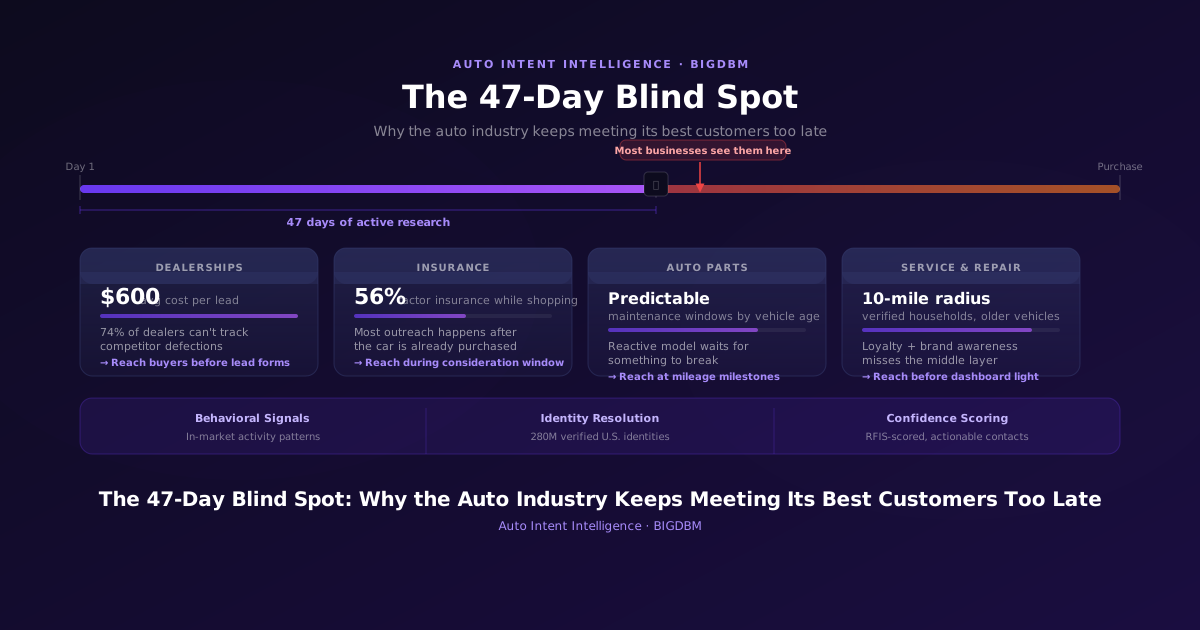
This is the 47-day blind spot — the average length of the modern auto-buying journey — and it is costing the auto industry far more than most operators realize.
What the Customer Is Actually Doing While You're Not Watching
The modern auto buyer does not go from "curious" to "buying" in a single visit to your lot or website. Research consistently shows that today's buyer touches 24 or more digital touchpoints before making contact with a business. They price-shop. They read forums. They check resale values. They calculate total cost of ownership.
And during all of that, they are extremely identifiable — if you know where to look.
Intent signals are behavioral cues that indicate someone is moving toward a purchase decision. Visiting OEM vehicle pages, using trade-in estimator tools, searching for financing terms, and comparing model trims are not random activities. They are a pattern. And that pattern, when matched to a real identity with verified contact information, becomes a reach opportunity that most of your competitors do not have access to.
digital touchpoints before first contact. The problem is not that signals do not exist. The problem is that most businesses in the auto ecosystem have no infrastructure to catch them.
Four Industries, One Shared Problem — But Very Different Consequences
Auto intent data is not a single use case. Each segment of the auto ecosystem experiences this blind spot differently, and the missed opportunities look different depending on where you sit.
You're Paying for the End of the Journey
The average dealership spends over $600 per lead — competing against buyers who have already comparison-shopped three alternatives and have a backup option queued up. 74% of dealers admit they are not fully satisfied with their ability to track whether a lead has defected to a competitor.
The Purchase Happens, Then You Call
56% of consumers factor in insurance costs while actively shopping for a vehicle — not after. Yet most auto insurance outreach happens after the car has already been purchased, when buyers are scrambling under time pressure and take the path of least resistance.
Waiting for Something to Break
Vehicle maintenance follows entirely predictable patterns if you know what vehicles people own and how old they are. A household with a 2019 pickup truck at 60,000 miles is entering a specific maintenance window. Timing belts. Brake pads. Known failure points for that make and model.
The Loyalty Gap Nobody Talks About
Independent shops rely on loyalty marketing for existing customers and brand awareness for new ones. What is missing is the middle layer: verified households nearby with older vehicles statistically entering a higher-maintenance window, reached before a dashboard light sends them to a competitor.
The Actual Bottleneck: Identity, Not Intent
Here is the thing that often gets missed in conversations about intent data: signals alone are not enough.
You can know that someone in a particular zip code is browsing SUV inventory. But knowing that and reaching a real, verified human being are two very different things. The gap between "a signal exists" and "we can act on it" is an identity problem.
Effective auto intent outreach requires three things working together:
Behavioral signals that indicate in-market activity — browsing OEM pages, using trade-in tools, comparing financing terms.
Identity resolution that connects those signals to real people with accurate contact information at scale.
Confidence scoring that tells you how reliable that match actually is — so you are not burning budget on data that was accurate six months ago and is not anymore.
The difference between intent data that is useful and intent data that is just expensive noise is the quality of the identity layer underneath it.
What Acting on This Actually Looks Like
The mechanics matter here, because "use intent data" is not a strategy — it is a category. The operational reality looks like this:
A dealership builds an audience of in-market buyers within 30 miles, matched to verified mobile numbers and emails, and reaches them with a direct offer before they submit a lead to any competitor. Not a retargeting ad they will ignore. An actual outreach at the moment of peak consideration.
An insurer identifies households where behavioral signals suggest an imminent vehicle purchase, overlays that with household financial data to prioritize high-value prospects, and launches a campaign timed to the consideration phase rather than the post-purchase scramble.
A parts company segments outreach by vehicle age and known maintenance milestones, reaching owners of specific makes and models with relevant offers before a part fails — building a customer relationship on proactive value rather than emergency rescue.
A service shop targets households with older vehicles in their service radius, offering seasonal maintenance packages to people who are statistically likely to need them — rather than waiting for a Yelp search to bring customers in.
In each case, the underlying mechanism is the same: real people, real contact information, real signals matched together with enough accuracy to make the outreach relevant instead of intrusive.
The 47 Days Are Happening Whether You're Watching or Not
Auto buyers are not going to slow down their research process and wait for your marketing to catch up. They are already deep in the consideration phase before most businesses even know they exist.
The question is not whether intent data is real — it is, and it is being used by your competitors right now. The question is whether you are going to keep meeting your best customers at the finish line, or start showing up at the starting gun.
The window is 47 days. You just need to be in it.
See who is in market for your auto vertical — right now.
BIGDBM provides identity-resolved automotive intent data connecting in-market behavioral signals to verified consumer contact information across 280 million U.S. identities.
Explore Automotive Data