
Companies often talk about having a 360-degree view of the customer. But if that view is built primarily from CRM, transaction, loyalty, and digital engagement data, it may actually be 360 degrees of the customer's relationship with the company, not 360 degrees of the customer. Even the richest first-party data only reflects what a customer has done within the portion of their life that your organization can see.
of businesses strongly agree that they have a comprehensive profile of their customers. Just 16% strongly agree that they have the data needed to understand them. Most organizations are working from a narrower view than they realize.
A 360-degree view of the customer relationship is not necessarily a 360-degree view of the customer.
The Transaction Is Only Part of the Story
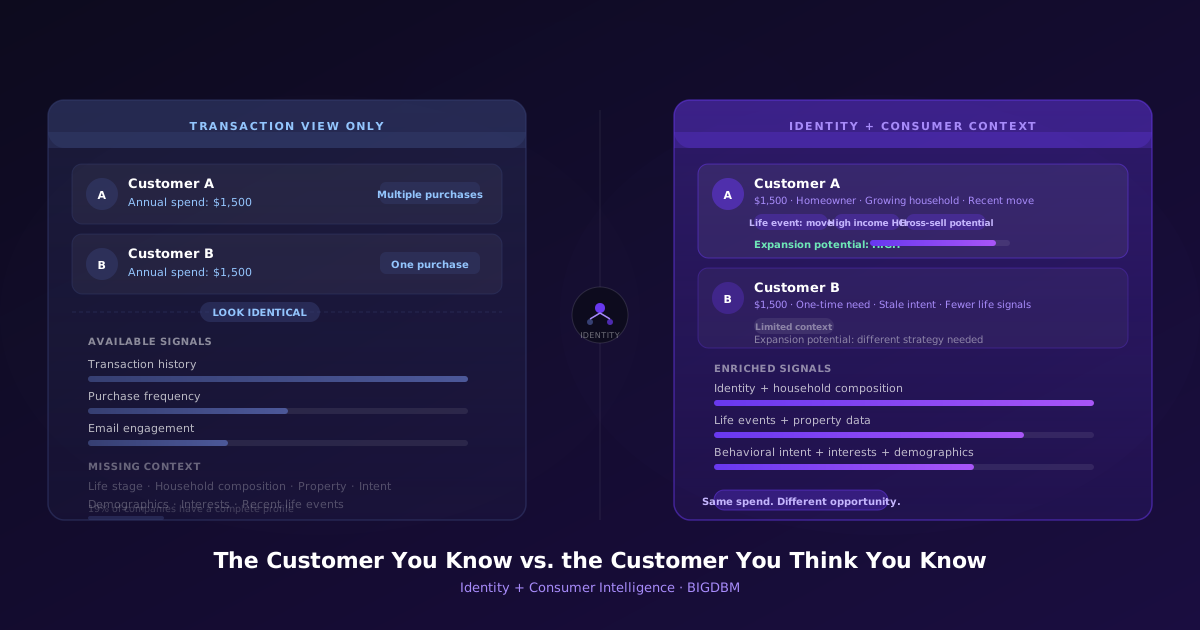
Consider two customers who each spent $1,500 with a retailer last year. Based on transaction history alone, they may appear equally valuable. Add identity and consumer intelligence, however, and a very different picture can emerge.
| Customer A | Customer B |
|---|---|
| $1,500 | $1,500 |
| Multiple purchases | One significant purchase |
| Homeowner | Purchase tied to a specific need |
| Growing household | Limited signals of broader demand |
| Recent move | Fewer indicators of near-term needs |
| Potential across additional categories | Potential may be more limited or different |
Same annual spend. Different customer context. Different potential next best actions.
The transaction tells you what happened. It does not tell you why, what else may be relevant, or what is likely to happen next.
There is also the question of whether you are looking at the right customer in the first place. People use multiple email addresses, move, change names, replace devices, and interact across channels. Members of the same household may appear as unrelated customers. A seemingly new customer may have years of history sitting elsewhere in the organization under a different identifier.
This is why identity is the foundation of customer intelligence. Before adding more information to a customer record, organizations need confidence that the signals they already have are connected to the right person or household.
From Customer Data to Customer Context
Once identity is established, enrichment and consumer intelligence can provide context that first-party data cannot. Household composition, property characteristics, demographics, interests, life-stage indicators, and other relevant signals can help explain differences that are invisible in CRM and transaction data alone.
More customer data is not necessarily more customer intelligence.
The value comes from the context that changes what the data means.
The objective is not to build the largest possible customer record. It is to identify the information that can materially change how a customer is understood.
First-party behavior tells you what customers have done with your business. Identity helps determine who those behaviors belong to. Consumer intelligence adds context around that person or household. Together, those signals can reveal that customers who look similar based on purchase history may represent very different opportunities, while customers who look different may share characteristics that point to similar needs or future behaviors.
A Better Customer View Leads to Better Decisions
A broader understanding of the customer can change decisions across the organization.
Marketing can build more relevant audiences and move beyond targeting based primarily on past behavior.
Analytics teams can create richer segments and models that reflect actual customer opportunity, not just transaction frequency.
Customer teams can identify potential value that is not yet visible in transaction history.
Leadership can develop a clearer picture of who the best customers actually are and where similar opportunities may exist in the broader market.
of consumers expect personalized interactions from companies.
76% report frustration when those expectations are not met. Meaningful personalization requires understanding more than a customer's last purchase or most recent interaction.
None of this makes first-party data less important. It makes that data more valuable. CRM, transaction, loyalty, and engagement data tell you what has happened within the customer relationship. Identity and consumer intelligence provide the context to better understand what those behaviors mean and where opportunities may exist.
The competitive advantage is not having more customer data. It is knowing which signals matter, connecting them to the right person or household, and using that context to make better decisions.
Building a More Complete Customer View
At BIGDBM, we believe connecting first-party data with identity and consumer intelligence builds a more complete understanding of customers and prospects. The goal is not simply more data. It is the right data and context to make better decisions.
BIGDBM's Identity Graph and Consumer Intelligence solutions connect fragmented identities and enrich first-party data with consumer, household, property, and behavioral signals, providing the context needed for smarter segmentation, targeting, and decision-making.
See the fuller picture of your customers.
Talk with Colleen to explore how BIGDBM's identity and consumer intelligence can close the gap between the customer you know and the customer who actually exists.
Schedule a 30-min call 30 minutes · Free · No commitment1 2024 State of Customer Engagement Report
2 The Value of Getting Personalization Right or Wrong Is Multiplying