
Automotive marketing often focuses on moments: buying a vehicle, shopping for insurance, needing a repair, or looking for a replacement. These are important moments. But consumers do not experience vehicle ownership as a series of unrelated events.
One vehicle can create years of changing needs. It is purchased or leased, financed, insured, maintained, repaired, accessorized, and eventually replaced. What someone drives today can provide useful clues about what they may need tomorrow.
That makes auto data valuable well beyond identifying who may be in the market for their next vehicle.
Start With What Is in the Driveway
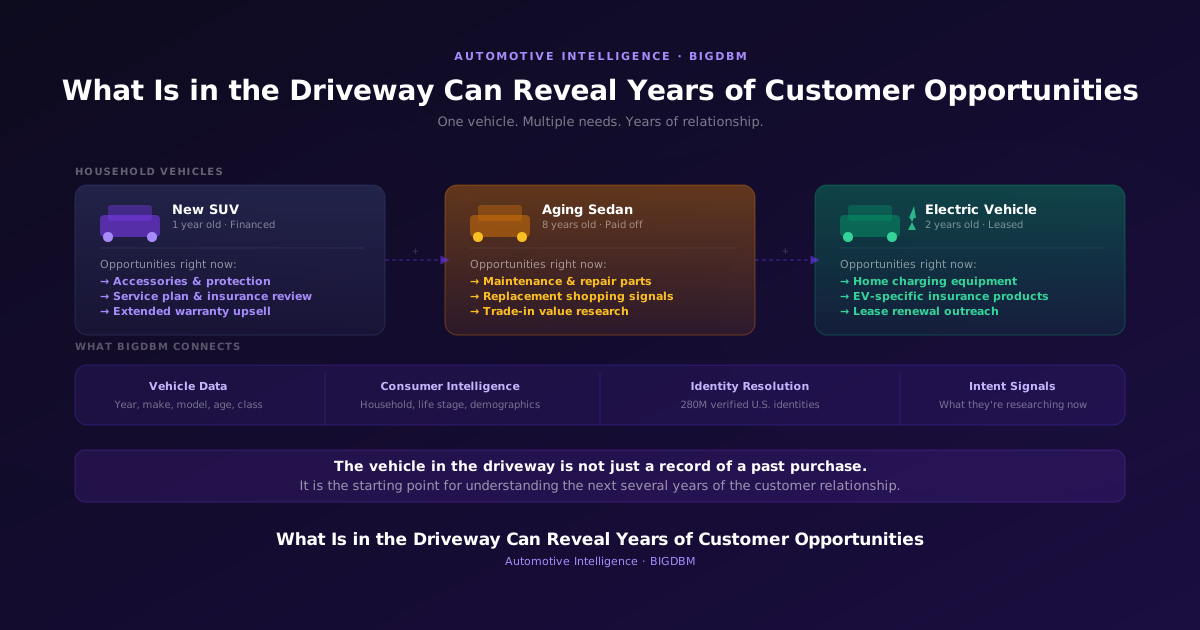
The vehicles already in a household can tell marketers a lot. Year, make, model, vehicle age, vehicle class, fuel type, ownership characteristics, and the number and types of vehicles in a household can all help indicate where different needs may be emerging.
Recent SUV Purchase
- Accessories and protection products
- Service plan and insurance review
- Extended warranty outreach
Older Sedan Household
- Maintenance, repair, and parts
- Trade-in value research signals
- Replacement shopping outreach
EV in the Household
- Home charging equipment
- EV-specific insurance products
- Lease renewal and upgrade timing
And the lifecycle does not always happen one vehicle at a time. A household might have a recently purchased SUV, an aging sedan, and a teenage driver approaching licensing age. Looking at only one vehicle or one transaction misses much of what is happening within that household.
This is where auto data becomes more than a targeting tool. It can help marketers understand where customers are today and anticipate the types of needs that may come next.
The Consumer Changes Too
Vehicles age, but households change at the same time. People move. Families grow. Children become drivers. Income changes. Consumers buy homes, change jobs, retire, and move into different stages of life. Those changes can affect what people drive, how many vehicles they need, what they can afford, and the products and services that become relevant.
That is why automotive data becomes more useful when it is connected to broader consumer and household intelligence. Two people may drive the same make and model, but that does not make them the same customer.
A growing family with two vehicles may need a larger vehicle, additional coverage, and child safety accessories — very different from an empty-nester household driving that same make and model.
A recent mover with an older vehicle may be entering a higher-maintenance window while simultaneously researching financing options in their new market area.
A household with a teen approaching driving age is a predictable candidate for a second vehicle purchase, insurance addition, and driver-education products — if you know to look for it.
Understanding both the vehicle and the consumer provides a much better foundation for deciding who to reach and why.
Look for Signs That the Lifecycle Is Moving
Knowing what someone drives provides a view of today. Other signals can help indicate what may be changing.
Consider a household with an older vehicle. On its own, vehicle age suggests that maintenance or replacement could become relevant. If that same household begins researching new SUVs, trade-in values, or auto financing, the picture changes significantly. The same data point becomes much more actionable when combined with what the consumer is doing right now.
No single data point tells the entire story. The value comes from connecting what is known about the vehicle, the consumer, and what they are doing now.
The same thinking applies throughout ownership. Someone researching tires or repairs may have an immediate service need. Interest in accessories could be relevant shortly after a purchase. Changes in vehicle research combined with household characteristics could indicate that existing vehicles no longer fit the household's needs.
This is not about predicting behavior perfectly. It is about narrowing the field from everyone to the people for whom an outreach is genuinely timely and relevant.
The Opportunity Is Bigger Than the Next Vehicle Sale
This approach matters across the entire automotive ecosystem, not just at the point of purchase.
Dealers and manufacturers can use auto data to support customer acquisition, service marketing, retention, and future vehicle purchases — building a relationship that extends well beyond the original sale.
Lenders can identify consumers who may be approaching another financing decision, informed by both vehicle age and recent research behavior.
Insurers can better understand the vehicles and households they want to reach, and time outreach to when policy decisions are actually being made.
Service providers, parts retailers, and aftermarket brands can identify consumers based on the vehicles they own and the needs those vehicles may create — before a breakdown or a search drives them somewhere else.
The question becomes broader than "Who is shopping for a vehicle right now?" It becomes: what do we know about the vehicles already in the household, where are they in their lifecycle, and what might that tell us about what this customer needs next?
Connecting Vehicles, Consumers, and Opportunity
BIGDBM brings together automotive data, consumer intelligence, identity resolution, and intent signals to help companies answer those questions across every stage of vehicle ownership.
Our automotive data provides detailed information about vehicles and ownership that connects with thousands of consumer attributes across demographics, household composition, financial characteristics, property, lifestyle, interests, and purchase behavior. Identity resolution links consumers, households, and vehicles into a coherent view. Intent data adds a current signal — what consumers are actively researching or considering right now.
Companies use this data to enrich existing customer records, understand the vehicles within their customer base, build more specific audiences, identify new prospects, and recognize opportunities across different stages of vehicle ownership.
The vehicle in the driveway is not just a record of a past purchase. It is the starting point for understanding the next several years of the customer relationship.
See what your customers' driveways can tell you.
Want to explore how automotive and consumer data could uncover new opportunities across your customer base? Let's start a conversation.
Talk with Colleen