
Retailers know a lot about their customers. Purchase history, website activity, loyalty programs, and CRM data provide a detailed picture of what customers have bought, browsed, and engaged with.
But much of that intelligence reflects the customer's relationship with the brand.
Intent data adds another perspective: what consumers are actively exploring across the broader market. For retailers, that creates an opportunity to understand not only what a customer has done, but what may be changing.
When the Signal Does Not Fit the History
Consider an apparel customer whose purchase history is dominated by denim and athleisure. Based on that history, it makes sense to keep recommending similar products. Then the customer begins researching professional attire or evening wear.
That signal is interesting precisely because it does not fit their history.
Intent can help marketers distinguish between a moment and a movement. A temporary need might trigger a timely campaign. A sustained change in intent could influence how the customer is segmented, which products are recommended, and how the brand communicates going forward.
A short burst of interest in evening wear might represent a specific event. The retailer can respond while that need is active with relevant apparel, shoes, accessories, or an offer. But what if interest in professional attire continues for several weeks or begins appearing regularly? That could indicate something different: the customer's needs or preferences may be shifting.
Traditional segmentation alone would keep serving the old model. Intent signals give you a reason to update it.
One Signal, Different Meaning
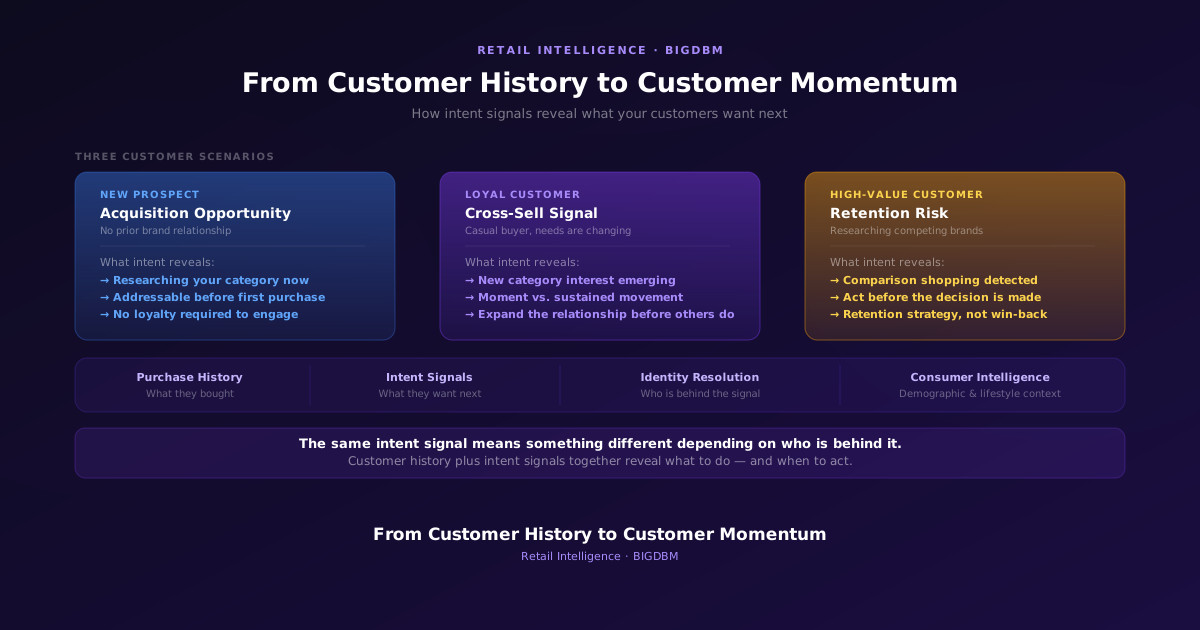
The same intent activity can mean something very different depending on who is behind it. Imagine three consumers researching professional attire.
No Prior Relationship
Has never purchased from your brand but is actively researching your category now.
Acquisition opportunityEvolving Needs
A frequent buyer of casual apparel showing sustained interest in a new category.
Cross-sell or upsellComparison Shopping
Your best customer is researching both the category and competing brands.
Retention strategyThe intent behavior is similar across all three. The customer relationship and the pattern behind the signal determine what you do with it. Without knowing who is behind the activity, a retailer might respond the same way to all three — or not at all.
A Better Signal for Win-Back
Intent signals can also reshape how retailers approach lapsed customers. Consider two customers who have not purchased in 90 days.
Customer A has been actively researching products and competing brands throughout that period but has not returned to purchase. That may suggest the customer is shopping elsewhere, raising questions about brand preference, pricing, or other factors influencing their decisions.
Customer B has shown little activity until recently, when they begin researching products again. They may simply be reentering the market after a quiet period.
Both customers are considered lapsed, but their behavior suggests very different opportunities. Customer A may need a compelling reason to return — a loyalty offer, a pricing incentive, a reminder of what sets your brand apart. Customer B may simply need a timely prompt at the right moment.
Intent helps retailers recognize those differences and develop more relevant win-back strategies rather than applying a single re-engagement template to every inactive account.
From Segments to Signals
Evaluated alongside a retailer's own customer history, intent signals support strategies across the full customer lifecycle.
Find new consumers demonstrating relevant interest now, before they make a purchase decision.
Identify interests that extend beyond previous purchases and reach customers when that new need is active.
Recognize when valuable customers are exploring competitors or alternatives before the decision is made.
Re-engage lapsed customers when renewed interest appears, with messaging matched to where they are in their journey.
Distinguish between short-term needs and evolving interests to keep recommendations and messaging relevant over time.
Traditional segmentation asks, "What do we know about this customer?" Intent adds: "What are they interested in now, and is that interest becoming something new?"
Together, those two questions create a much more complete view of who to engage, with what, and when.
Turning Intent into Action with BIGDBM
BIGDBM combines Intent Data with identity and consumer data to help retailers identify consumers demonstrating interest in relevant products, categories, and brands. Demographic, household, and lifestyle attributes provide additional context, while identity resolution enables brands to build addressable audiences for acquisition, retention, and win-back.
The result is a clearer picture of who to engage, what matters to them now, and when to act.
Ready to see what your customers and prospects are signaling?
Let us show you how intent data combined with identity resolution can improve your acquisition, retention, and win-back results.
Schedule a conversation