Every time a consumer clicks an ad on their phone, browses a product page on their laptop, and then walks into a store three days later, they leave behind three separate breadcrumb trails. Without identity resolution, those trails belong to three different strangers. With it, they belong to the same person, and your marketing can reflect that.
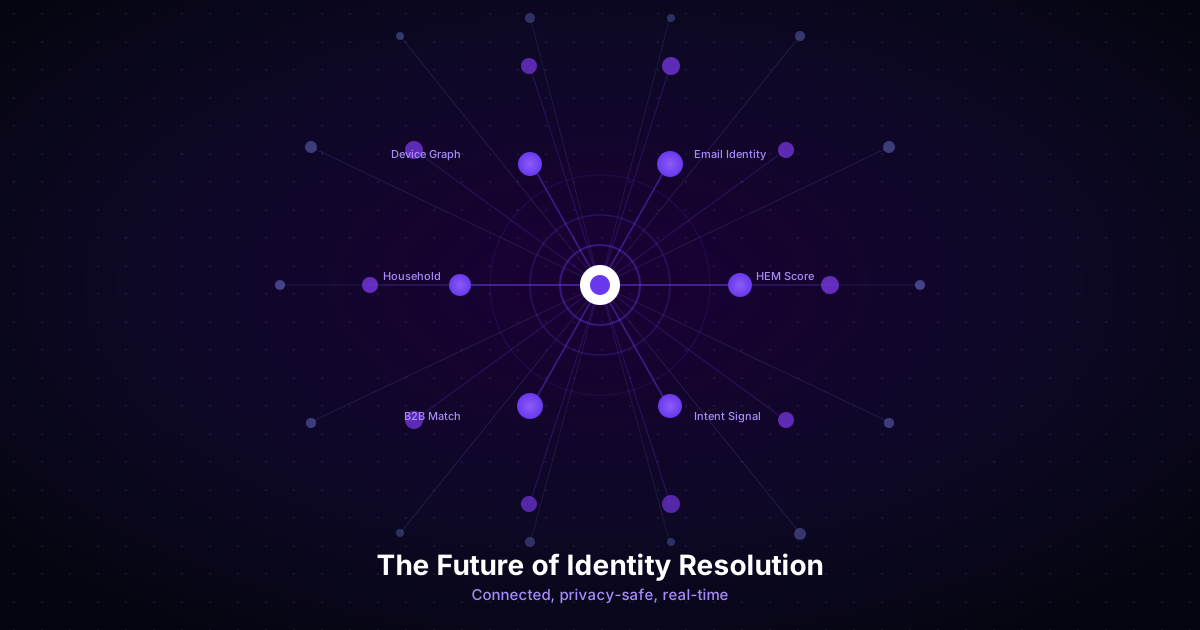
Identity resolution is the technology and process of connecting disparate data points, email addresses, device IDs, postal addresses, phone numbers, browser cookies, to a single, persistent consumer profile. It sounds straightforward, but doing it accurately, at scale, and in a privacy-compliant way is one of the hardest problems in modern marketing.
Why Identity Resolution Matters Now More Than Ever
Third-party cookies are disappearing. Apple's App Tracking Transparency (ATT) framework has made mobile device IDs unreliable. Meanwhile, consumer journeys have fragmented across more channels than ever: connected TV, retail media, social, search, email, SMS, in-store.
The brands that thrive in this environment are those with a first-party identity foundation, a clean, persistent, consented view of their customers that doesn't depend on browser cookies or platform intermediaries. Identity resolution is how you build that foundation.
The Three Layers of Identity Resolution
Deterministic matching connects records based on exact shared identifiers, the same email address appears in two systems, so they're the same person. This is the most accurate method but requires consumers to have actively shared the same identifier across touchpoints.
Probabilistic matching uses statistical inference: if a device at 42 Oak Street, in the same household as a known customer, visits your site at 9 PM, that's likely the same person or household. Probabilistic matches enable scale that deterministic alone cannot reach, but they introduce a confidence variable that needs to be managed.
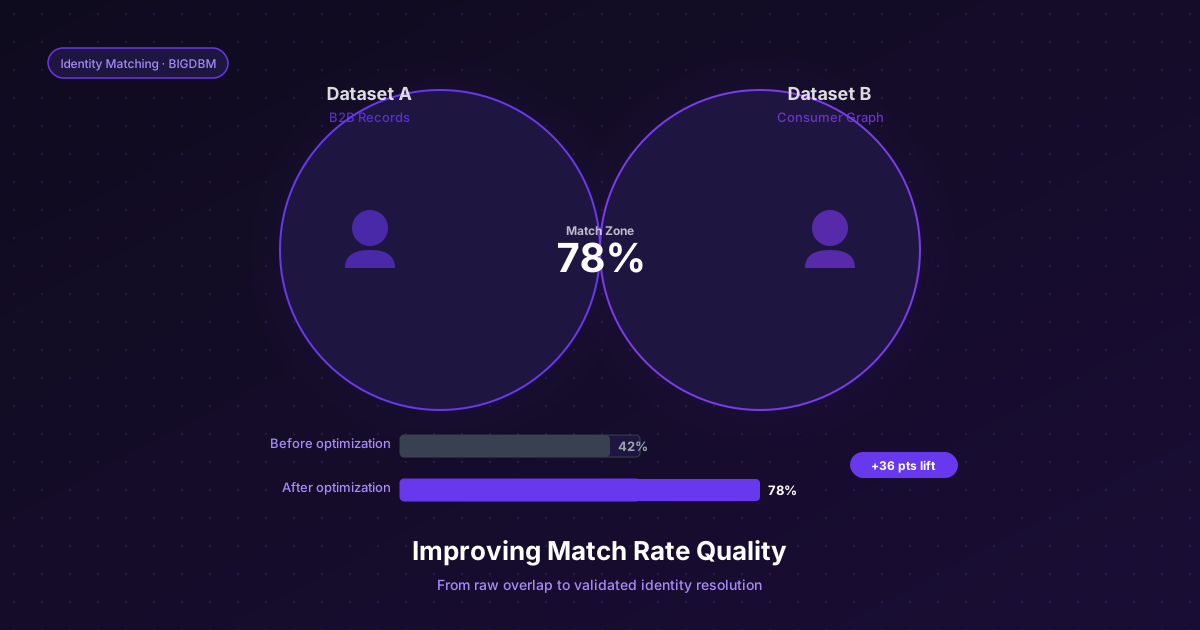
Scored resolution, the approach BIGDBM uses, assigns a confidence index to every identity link. Instead of a binary "match / no match," you get a number from 0–100 that tells you how confident the system is. This lets downstream teams choose their own precision-vs-scale tradeoff: use only 90+ scores for high-stakes suppression, open up to 70+ for broad prospecting.
What Lives in an Identity Graph
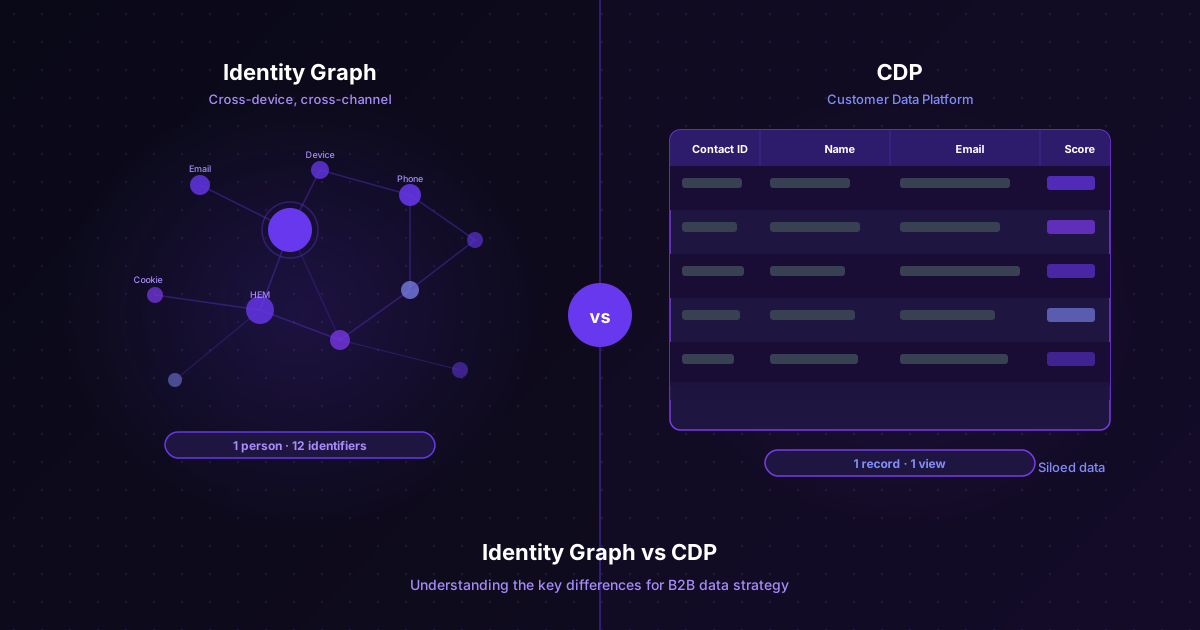
An identity graph is the persistent store of all those resolved connections. A well-built graph links:
• People, name, DOB, gender
• Contacts, verified email addresses, phone numbers (mobile and landline)
• Households, address history, household composition
• Devices, mobile ad IDs, hashed device fingerprints
• Digital identifiers, hashed emails (SHA-256, MD5), RampIDs, UID 2.0 tokens
The quality of the graph is only as good as the freshness and sourcing of its inputs. Stale addresses, recycled phone numbers, and inferred rather than observed connections all degrade match quality. Audit-friendly lineage, knowing exactly where each link came from, is what separates a defensible graph from a black box.
Privacy Compliance Is Not Optional
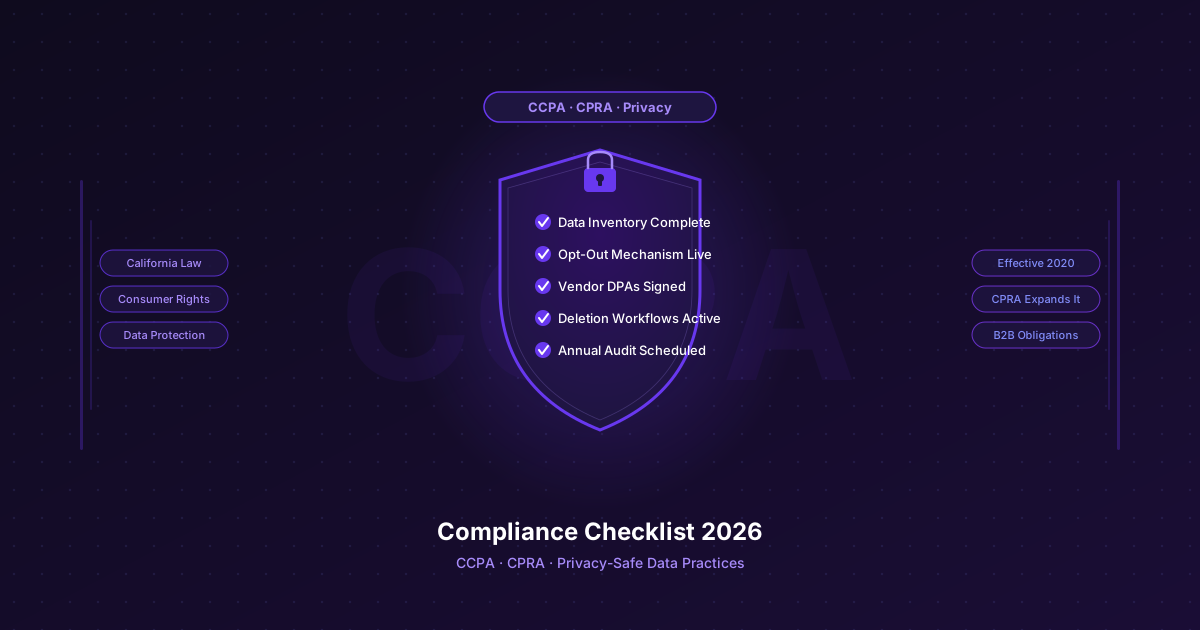
CCPA, GDPR, and a growing patchwork of US state privacy laws require that consumers can find out what data is held about them and request deletion. This is operationally hard at the identity graph level: if a consumer's email appears in 14 records connected to three device IDs, a deletion request means finding and suppressing all 14.
The only sustainable approach is building privacy-by-design from the start: consent management, opt-out suppression lists baked into every data request, permitted-use controls that restrict data to allowed purposes, and audit trails that can reconstruct the chain of consent on demand.
How to Evaluate an Identity Provider
When assessing a partner, ask these five questions:
1. What is the match rate on my own first-party file? Run a test with a known segment. Match rate tells you coverage; confidence score distribution tells you quality.
2. How often is the graph refreshed? Phone numbers and addresses change constantly. A graph that refreshes quarterly will degrade fast in high-churn segments like renters or mobile-heavy demographics.
3. Can you show lineage? Every link should trace back to an observed source, not just an inference. If the provider can't explain a match, you can't defend it.
4. How are opt-outs handled end-to-end? Suppression needs to propagate from the graph through all downstream activations in near-real-time, not in a monthly batch.
5. What happens when the data is wrong? Errors happen. A mature provider has a dispute resolution process and a commitment to correcting confirmed mistakes promptly.
The Bottom Line
Identity resolution isn't a feature you buy once and forget. It's an ongoing capability that requires high-quality source data, transparent methodology, privacy engineering, and a partner willing to be accountable for the accuracy of every connection.
Done right, it turns fragmented signals into a coherent customer view, one that survives the deprecation of cookies, respects consumer preferences, and makes every downstream marketing dollar work harder.