Most conversations about AI training data start with volume: how many records, how many tokens, how many terabytes. Volume matters, but it is rarely what separates a model that performs in production from one that quietly disappoints. The teams getting tangible results ask different questions. Here are five points that matter more than size.
1. Representation, Not Just Scale
A model learns the world it is shown. If your training set over-represents urban homeowners aged 35 to 54, the model will be confident and wrong about everyone else. This is how a churn model works beautifully on last year's customers and fails on the segment you are trying to win next.
Before training, profile your data against the population you want the model to serve. Gaps in geography, age, household type, or purchase behavior are far cheaper to fix before training than after launch.
2. One Person, One Record
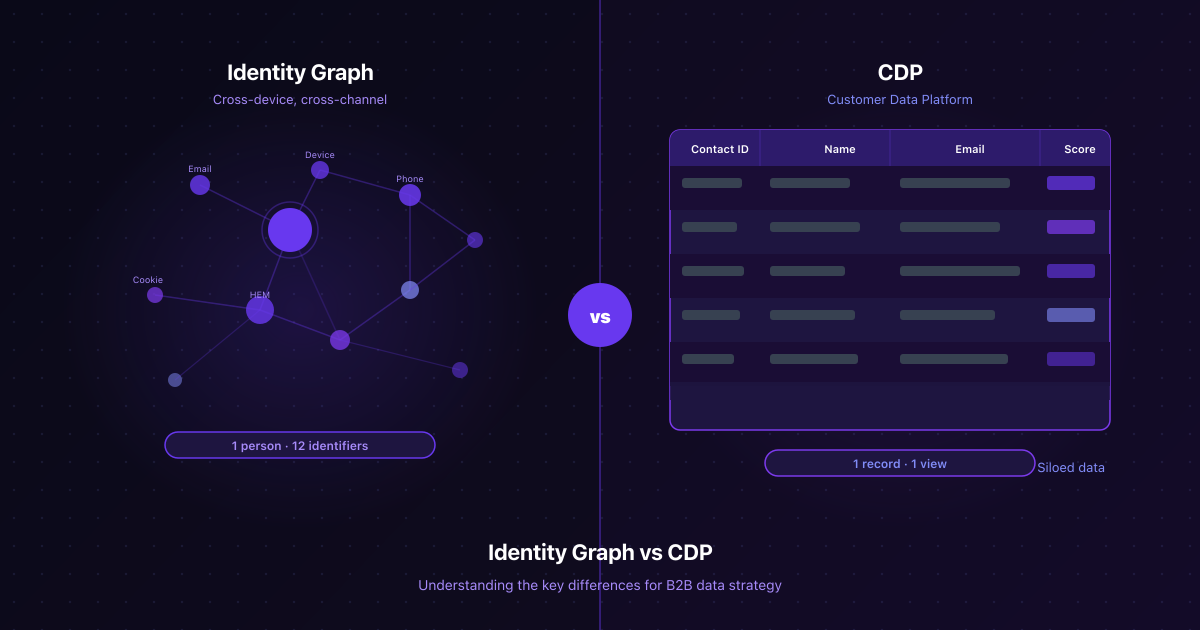
Duplicates are one of the most underestimated problems in training data. When the same individual appears as three records — a work email, a personal email, a mobile number from a different source — the model treats them as three people. The data over-weights that person's behavior, inflates apparent patterns, and can leak information between training and test sets, making accuracy look better than it is.
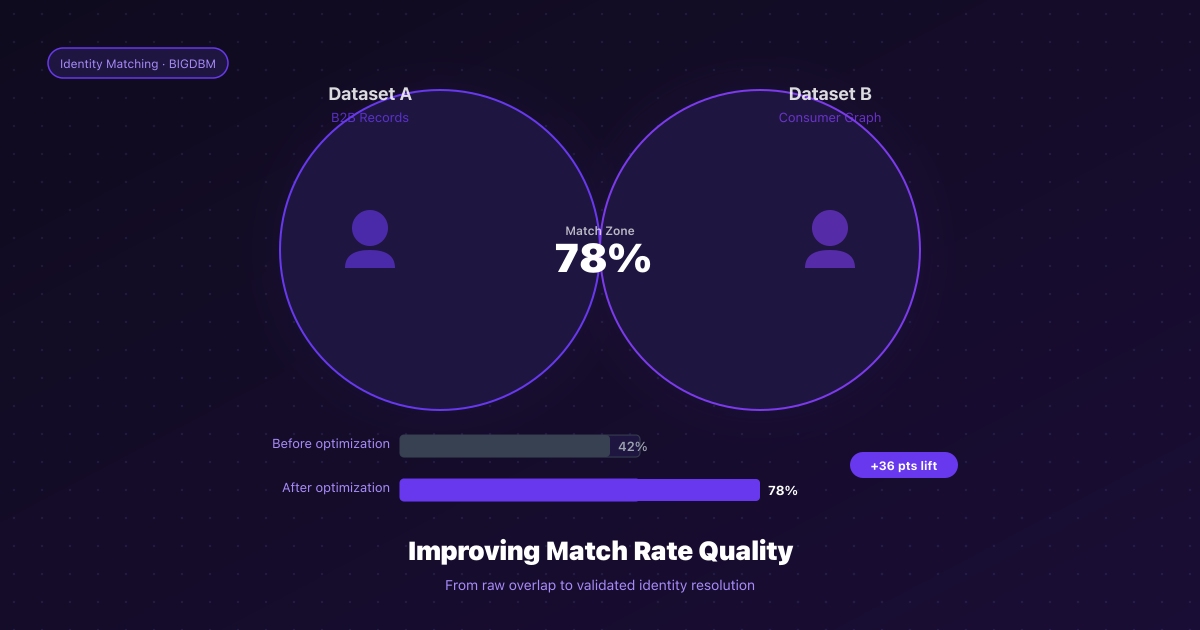
Identity resolution, the process of determining which records describe the same real-world person or household, is therefore a modeling step as well as a data-hygiene step. Resolve identities first, then train. A confidence score on each match helps too: you can decide how aggressively to merge instead of treating every link as certain.
A dataset with 10 million deduplicated, identity-resolved records will almost always outperform one with 50 million raw records and no entity resolution pass. Train on quality, not on noise.
3. Labels You Can Defend
Supervised models learn from labels: "converted," "churned," "fraudulent," "high value." If those labels are inconsistent, delayed, or defined differently by different teams, the model learns the inconsistency. Document how each label is created, who owns the definition, and how long after the event it is applied. A "purchased within 30 days" label assigned on day 10 teaches the model something different from one assigned on day 40.
4. Freshness That Matches the Decision
People move, change jobs, switch phone numbers, and buy homes. A dataset that was accurate 18 months ago may describe a population that no longer exists. Decide how quickly the thing you are predicting changes, then set a refresh cadence to match. For fast-moving signals, this may mean enrichment at the point of use rather than a static file refreshed once a year.
5. Provenance and Permission
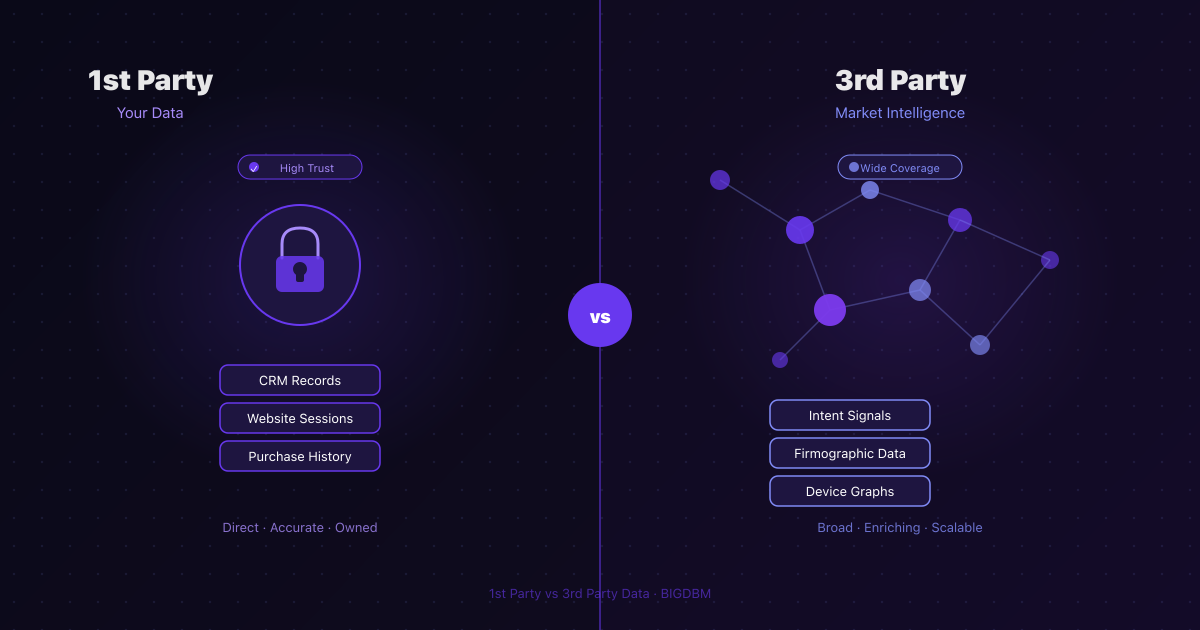
This is the one that can stop a project outright. Every record in a training set should carry an answer to two questions: where did this come from, and what is its permitted usage? Data collected for one purpose is not automatically fair game for model training, and regulators, enterprise buyers, and your own legal team are all asking harder questions than they were two years ago.
Lineage you can audit, consent and opt-out handling that propagates, and documented permitted uses are what let a model survive scrutiny after it ships. Retrofitting provenance onto a trained model is painful. Building it in from the start is not. For a practical framework, see BIGDBM's CCPA compliance checklist as a starting point for structuring your permitted-use documentation.
A Practical Checklist
Before your next training run, ask:
- Does the dataset reflect the population the model will serve?
- Have identities been resolved so each person is counted once?
- Are labels defined consistently and applied on a consistent timeline?
- Is the data fresh enough for the decision being made?
- Can you trace every source and confirm permitted use?
If you can answer yes to all five, you have something better than a big dataset: a trustworthy one. And trustworthy data is what turns an impressive demo into a model your business can rely on.
Start with one person, one record
Duplicate and unverified identities quietly undermine even the best-designed models. BIGDBM's Scored Identity Resolution uses AI-assisted matching with confidence indices, so you know how strong every link is before it reaches your training pipeline.